The Power of the Industrial Landscape
5 MAY 2026
Industry is, for me as an artist with a graphic background, a particularly fascinating subject.
What immediately appeals to me is that in industrial environments I often see strong structures, rhythm and visual logic, combined with raw materials and heavy matter. An industrial landscape is usually built on repetition and systems: pipelines, steel structures, cranes, machines and production lines. As a graphic designer, I experience this almost as a “living grid” — comparable to a grid as a foundation in graphic design, but in a physical form.
In addition, the visual power of industry is significant. Hard lines, geometry, large planes and strong contrasts between light and dark, between rust and metal, and between chaos and structure create a rich visual field. It is precisely this tension that makes it interesting to translate into graphic artwork.
Just like in typography and graphic design, the industrial image is often about repetition and variation in patterns: factory windows, rows of containers or repetitive machine components. This rhythm is not only orderly, but also dynamic and engaging.
Industrial landscapes also reveal a lot about human influence on the environment, often without the human presence being visible. It says something about production, labour, scale and anonymity.
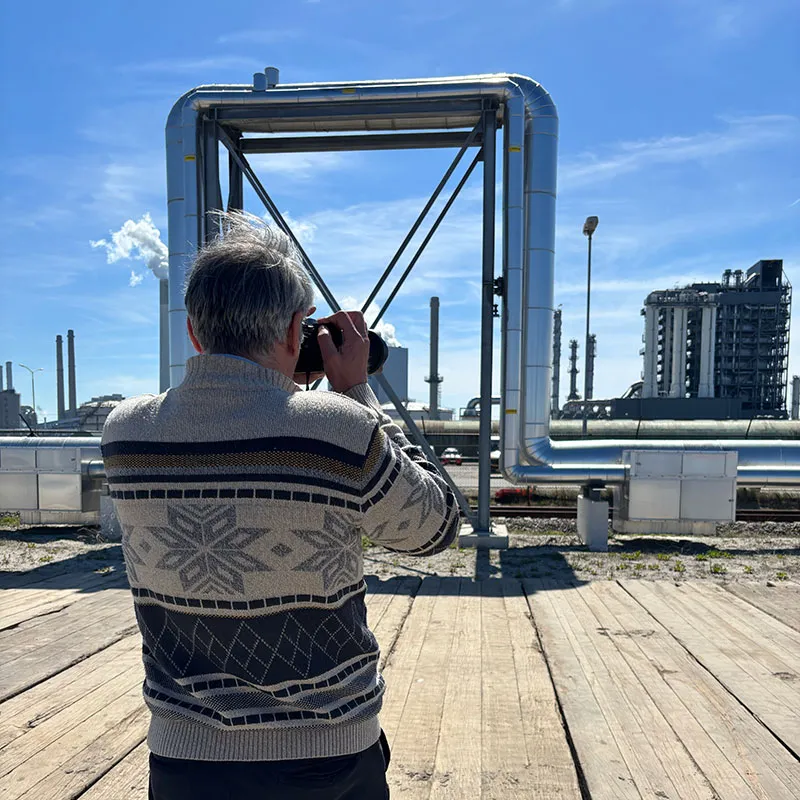
I enjoy visiting industrial areas and companies. There I photograph materials such as steel, concrete, glass, rust, oil and traces of wear. These elements offer many possibilities for painterly and graphic interpretations.
For me, industry is therefore a kind of unconscious graphic landscape: a world full of structure, repetition and visual systems that I can translate into powerful, layered images with expressive impact.
The works can be viewed in the ‘Industrial’ category.